Queer Places:
Campo Cestio, Rome, Città Metropolitana di Roma Capitale, Lazio, Italy
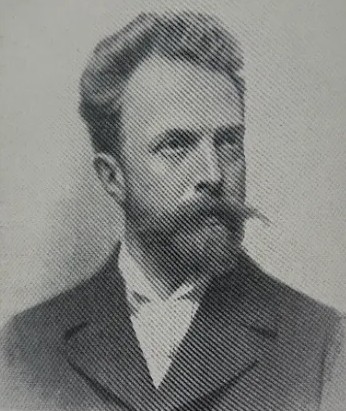 Henry Bennet “Harry” Brewster (November 28, 1850 - June 13, 1908) was a 19th-century English-American philosopher, poet, and writer. Though he lived a cosmopolitan and
relatively quiet life among European intellectual circles, he remains a notable figure primarily through his writings and his complex connection to the pioneering British
composer Dame Ethel Smyth.
Henry Bennet “Harry” Brewster (November 28, 1850 - June 13, 1908) was a 19th-century English-American philosopher, poet, and writer. Though he lived a cosmopolitan and
relatively quiet life among European intellectual circles, he remains a notable figure primarily through his writings and his complex connection to the pioneering British
composer Dame Ethel Smyth.
Born in Paris on November 28, 1850, to an aristocratic American family with deep roots in New England, Brewster was educated primarily in France and Germany. Fluent in
several languages and deeply immersed in Continental philosophy, he lived much of his adult life in Italy (particularly Rome and Florence) and France.
Brewster wrote philosophical dialogues, essays, and poetry in both English and French. His published works include The Theories of Anarchy and of Law (1887), The Prison:
A Dialogue (1891), and L’Âme d’une Reine (1892). His writing frequently grappled with themes of individual freedom, metaphysics, human consciousness, and the soul’s
departure from mortal constraints.
Brewster married Julia Von Stockhausen in 1873, with whom he had two children. It was through his wife’s
family network in Germany that he first encountered Ethel Smyth in the late 1870s. Following the breakdown of his marriage, Brewster developed a deep, lifelong bond with
Smyth until his death from cancer on June 13, 1908.
Brewster’s role in LGBTQ history is tied directly to his relationship with Dame Ethel Smyth—one of the earliest openly queer female classical composers and a prominent
militant suffragette.
Smyth was almost exclusively attracted to women throughout her life, maintaining passionate romantic relationships with figures such as writer
Virginia Woolf, suffragette leader Emmeline Pankhurst, and several high-society
women.
Brewster was the notable exception in Smyth’s life—frequently cited by biographers as her only male romantic partner and lover. Their relationship was non-traditional;
while intensely romantic and soul-mate-like in intellectual intensity, Smyth’s primary sexual and romantic orientation was toward women.
Smyth spoke openly with Brewster about her sexuality, using their correspondence to articulate her feelings about her attraction to women at a time when such open
dialogue was rare. In a famous 1892 letter to Brewster, Smyth candidly reflected on her identity:
"I wonder why it is so much easier for me to love my own sex passionately than yours. I can't make it out for I am a very healthy-minded person."
Brewster accepted and understood Smyth's non-conformist sexual identity without judgment, remaining a constant anchor in her life while allowing her the freedom to pursue
women.
Beyond their personal relationship, Brewster served as Smyth’s primary literary collaborator and librettist:
Brewster wrote the French libretto for Smyth’s major opera, Les Naufrageurs (The Wreckers, premiered in 1906), widely considered one of the most significant British
operas of the era.
Decades after Brewster’s death, Smyth set his philosophical work The Prison (1891) to music in 1930. The resulting hour-long vocal symphony became her final large-scale
masterpiece before her hearing loss ended her composing career.
Brewster’s legacy survives not only through his philosophical prose, but as a sympathetic confidant and creative partner who supported one of classical music’s most
prominent queer pioneers.
References:
- https://mineria.org.mx/en/ethel-smyth-inspiracion-de-la-comunidad-lgbtq/
- https://lgbthistoryuk.org/wiki/Ethel_Smyth
- https://www.laopera.org/discover-la-opera/explore/blog/a-brief-history-of-queer-opera
- https://en.wikipedia.org/wiki/Ethel_Smyth
Support this project
This website is a passion project researched, developed, and funded entirely by me. If you find the content valuable and would like to help support the ongoing research and hosting costs, any contribution is deeply appreciated.
Thank you for keeping this independent resource alive!
My books on Amazon: Elisa Rolle's books
BACK TO HOME PAGE